

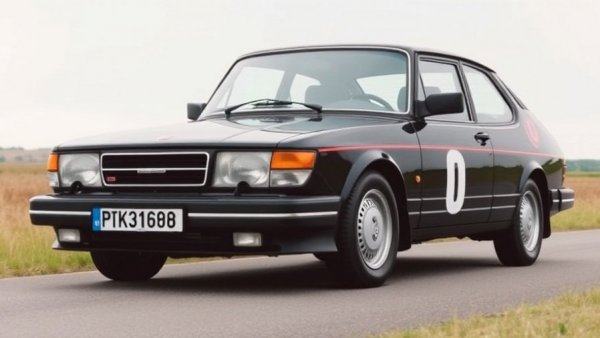
Unveiling a Revolutionary Era in Automotive Design
In the landscape of automotive history, 1977 quietly ushered in a wave of innovations that would shape the future of car design and engineering. While major brands like General Motors and Porsche made headlines with their downsized models and new front-engine designs, the introduction of the Saab 99 Turbo stands as a pivotal moment that would eventually influence nearly every vehicle on the road today. This Swedish marvel pushed the boundaries of what a car could be, focusing on mid-range torque and driving dynamics rather than sheer speed, thus redefining driver expectations.
Turbocharging: More Than Just Boost
The Saab 99 Turbo was a significant advance in turbocharging technology. Unlike other manufacturers who emphasized high-end power, Saab's approach was revolutionary. John Lamm noted in Road Track that Saab's turbocharger was designed to maximize torque at mid-range speeds, making it a practical choice for everyday drivers. Saab ingeniously integrated Bosch’s K-Jetronic fuel injection to work harmoniously with its small turbocharger, not only enhancing performance but also ensuring compliance with emerging emissions regulations.
The Engineering Behind the Innovation
At its core, the Saab 99 Turbo featured an ingenious Slant-4 engine that was derived and modified from the British Triumph Stag's V-8 engine. With its iron block and single overhead camshaft, it was not an exotic powerhouse, but it prioritized durability and reliability. This facet made the 99 Turbo appealing to drivers who sought everyday dependability without sacrificing performance. Additionally, Saab's experience in turbocharging with its Scania large truck division enabled them to craft a vehicle that was both fun to drive and suitable for daily use.
The Cultural Impact of the Saab 99 Turbo
Saab owners have often been regarded as a unique demographic, characterized by a distinct set of values and preferences. Interestingly, research indicated that Saab owners skewed heavily toward liberal ideals; a striking 98% voted for Democratic candidate George McGovern in the 1972 election. This socio-political connection points to a lifestyle choice intertwined with car ownership, demonstrating that the Saab 99 Turbo was not just a vehicle, but a statement of identity. The blend of an avant-garde design and environmental ethos attracted buyers who wanted to align their automotive choices with their progressive ideals.
Performance Meets Responsibility: The Lambda Technology
One of Saab’s groundbreaking achievements was the integration of Lambda technology, designed to balance performance with environmental responsibility. With strict emissions controls becoming mandatory, many manufacturers struggled to adapt. Saab’s innovative Lambda emissions technology allowed the 99 Turbo to thrive amidst these regulations, representing a commitment to both speed and sustainability. Not only did this set a precedent, but it also allowed for the coexistence of high performance and environmental stewardship.
A Legacy of Influence: From Saab to Today's Cars
The legacy of the Saab 99 Turbo can be seen in a myriad of modern vehicles that follow in its footsteps. Car manufacturers today prioritize not only raw power but also efficiency and environmental considerations. The turbocharged engines commonly found in today's cars—especially compact and midsize sedans—have their roots traced to innovations like those pioneered by the Saab 99 Turbo. As consumers become more environmentally conscious, manufacturers are re-evaluating how they engineer powertrains to align with this changing landscape.
Lessons Learned from the Saab 99 Turbo
For modern drivers and auto enthusiasts, the legacy of the Saab 99 Turbo offers valuable lessons about innovation in the face of challenges. Its blend of practicality, performance, and avant-garde engineering principles highlights the potential for timeless designs to reinvigorate the market. The ability to adapt to regulatory changes while maintaining vehicle integrity sets Saab apart as a pioneer for current and future manufacturing practices.
Engaging with Automotive History
The story of the Saab 99 Turbo is more than just a tale of a car; it is a narrative that speaks to the evolution of automotive engineering and the cultural shifts of the times. Today, as electric and hybrid vehicles emerge, the principles of balance between performance and environmental responsibility remain relevant. Studying the innovations that the Saab 99 Turbo introduced can instill a respect for the artistry and science of automotive design, encouraging both manufacturers and consumers to prioritize responsible developments moving forward.
Conclusion
While the Saab 99 Turbo may not be the most commercially successful vehicle, its impact on automotive engineering and culture is undeniable. Next time you get behind the wheel, consider the profound legacy of cars like the Saab 99 Turbo that have paved the way for innovation while prioritizing the needs of the driver and the planet. Seize the opportunity to learn more about the evolution of automotive technology and its cultural significance, and let it inspire your own journey with vehicles.








Write A Comment