

Understanding the Significance of Safety Measures in NASCAR
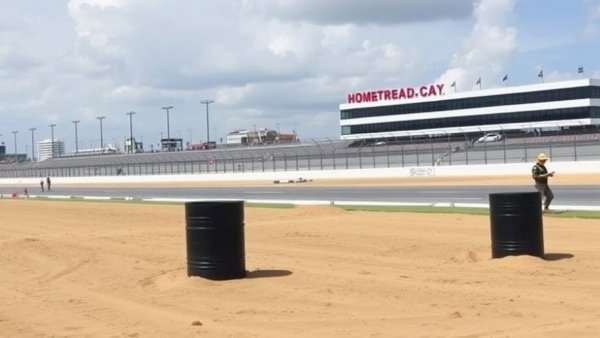
In the high-stakes realm of NASCAR racing, safety is paramount. The recent incident involving Andrew Patterson crashing into the sand barrels at Homestead-Miami Speedway serves as a stark reminder of the importance of proper safety measures on the track. The sand barrels, strategically placed at the pit-lane entrance, are intended to absorb impact and minimize damage, acting as a crucial line of defense for drivers when navigating the transition between high-speed racing and the slower pace of pit stops. However, Patterson’s mishap highlights ongoing concerns about the effectiveness of such safety features, particularly during critical moments in a race.
A Familiar Pattern: The Recurrent Issues at Homestead-Miami
This isn't the first instance of accidents at the Homestead-Miami Speedway. A notable example occurred in 2023 with Kyle Larson, whose championship hopes were dashed when he crashed while trying to secure a coveted spot in the playoffs. Such incidents underline the volatile nature of racing dynamics in high-pressure scenarios. The track's unique layout, coupled with the fierce competition among drivers, escalates risks, making protective measures like sand barrels essential but not infallible. The tricky combination of speed and strategic maneuvering can catch even seasoned racers off guard.
The Battle for Championship: High Stakes and High Tension
As the 2026 O’Reilly Series Championship unfolds, five drivers are fiercely vying for the championship title. Tensions run high as these racers navigate the fine line between aggression and caution. Drivers like Carson Kvapil and Sam Mayer understand that every pit stop could dramatically alter the course of the race. Just before Patterson's accident, they entered the pits, having engaged in an intense battle for the lead. This scenario adds complexity to each racing strategy—pit stop precision is critical, and even the smallest error can lead to disaster. The stress of knowing that championship dreams hinge on every decision amplifies the pressure, showcasing the mental fortitude required to excel in this sport.
What We Can Learn from These Incidents
A close analysis of the crashes at the Homestead-Miami Speedway provides invaluable insights into the mental and physical demands placed on drivers. The adrenaline rush during races can prompt aggressive driving choices resulting in unintentional actions, such as hitting sand barrels or incurring penalties for pit road infractions. Additionally, the psychological factors come into play; the pressure to perform can cloud judgment and lead to swift decision-making that a driver might not normally make under less stressful conditions. Understanding these pressures can enable teams to develop refined strategies that mitigate risks during pivotal moments of the race.
Championship Math: The Impact of a DNF on Season Goals
For competitive racers, a Did Not Finish (DNF) is devastating. Each race serves as an opportunity to accumulate vital points, and a DNF can significantly derail championship aspirations. Larson’s crash last year not only ended his race but also severed his chances of becoming a champion, illustrating just how much every point matters in this intensely competitive context. With Larson needing only nine points to secure his third championship, every moment of hesitation and every strategic miscalculation could lead to unexpected outcomes, as recently demonstrated by Patterson's incident. The importance of staying focused on the task at hand cannot be overstated, as even the smallest mishap can transform a season from hopeful to harrowing.
Projecting Future Improvements to Track Safety
As discussions about track safety continue, it’s essential to evaluate what the future holds for NASCAR. Will enhancements include better barriers, or will track designs undergo reevaluation to boost safety? Improvements in safety features not only protect the athletes behind the wheel but also impact the fan experience. For instance, increasing visibility along the track can help not just the drivers but also those watching from various vantage points, decreasing risks of accidents and enhancing the overall atmosphere of anticipation and excitement. These improvements could potentially lead to increased support for the sport, as fans feel safer and more engaged during events.
A Final Note on Technology's Role in Racing Safety
As technology evolves, so too do the strategies and innovations used in NASCAR racing. Advanced telemetry, predictive analytics, and real-time data solutions can aid teams in improved emergency responses and more accurate assessments of track conditions. Moving forward, the integration of technology, such as artificial intelligence (AI), may assist in simulating racing conditions, predicting potential risks, and ultimately contributing to the development of more effective safety measures. Such advancements not only bolster driver safety but also enhance the competitive edge that teams require to perform at the highest level.
In conclusion, incidents like Andrew Patterson’s crash at Homestead-Miami Speedway underscore the persistent challenges faced by NASCAR regarding safety and competition. As the racing community continues to respond to these events, fans can anticipate significant changes aimed at enhancing driver safety while maintaining the thrilling pace that defines the sport. This dynamic environment keeps spectators engaged, reinforcing the excitement of NASCAR racing. Stay informed, and as always, keep your interest in automotive technology and safety at the forefront of your mind.










Write A Comment