

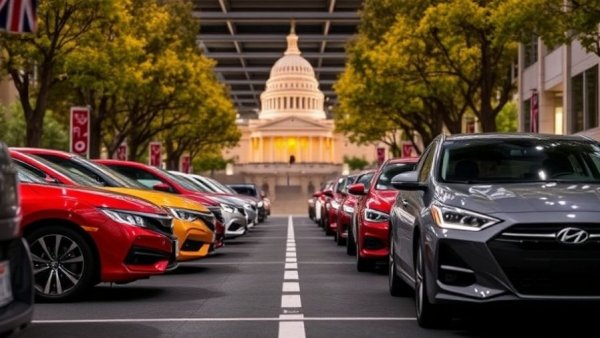
The Rising Tension Over Chinese Cars in the U.S.
In recent months, the issue of Chinese vehicles has escalated into a heated political topic in the United States. The Alliance for Automotive Innovation, which represents a vast array of automakers—from industry giants like General Motors and Toyota to luxury brands like Ferrari and Porsche—has firmly stated that they support a permanent ban on Chinese vehicles entering the U.S. market. According to John Bozzella, the president and CEO of the Alliance, this ban is necessary to safeguard American interests against potential threats, asserting that these imports may pose security risks and effectively undermine local manufacturers that have made substantial investments in American communities.
Bipartisan Support for Regulation
Interestingly, support for banning Chinese vehicles is emerging as a rare point of consensus among politicians, with both Democrats and Republicans backing the initiative. Senators Elissa Slotkin (D-MI) and Bernie Moreno (R-OH) jointly authored the Connected Vehicle Security Act of 2026, a bill that aims to further legislate against these imports. This bill passed unanimously through the Senate Commerce Committee this summer and is anticipated to be voted on during the upcoming lame duck legislative session after the midterm elections. Over 100 cosponsors in the House of Representatives echo this concern, indicating a strong desire for action.
Understanding the Market Dynamics
But the push for a ban goes beyond mere security concerns. Bozzella has highlighted the growing competition from Chinese automakers, particularly after witnessing their increasing dominance in the European market. In the first eight months of 2026 alone, China exported over 1.1 million vehicles to Europe—already surpassing the total for 2025. This surge prompts legacy automakers to view the need for regulations seriously, especially as they analyze the implications for their own market positioning.
Protecting American Interests
In his statements, Bozzella expressed that "Given the obvious national security risk and China’s pattern of unfair behavior, Congress should protect our defense and advanced manufacturing base and stop Chinese automakers from doing here what they’ve gotten away with in Europe.” This sentiment echoes concerns about China’s history of protecting its own industries through heavy subsidies and unfair practices, which have affected various sectors, including solar technology and drones.
The Complexity of Legislative Efforts
The original wave of regulations against Chinese automakers began during the Biden administration, with measures already in place that prevent them from selling or producing passenger vehicles in the U.S. due to concerns over data privacy. For instance, Polestar, a Swedish electric performance car brand, will face a ban from the U.S. market starting in 2027 as a direct outcome of these regulations. However, the Connected Vehicle Security Act of 2026 aims to take a more comprehensive approach to this issue by further addressing economic and national security concerns.
The Implications of a Possible Ban
Moreover, Senator Slotkin outlined a broader economic security concern stating, “You don't have to be a deep expert to understand that the Chinese Communist Party heavily subsidizes their industry, so they have a whole strategy of basically stealing our intellectual property.” This assertion highlights the complexity of how global markets operate and the potential risks of allowing foreign products, particularly those from nations with different business practices, into America. The fears of intellectual property theft are compounded by a deep-seated resolve to maintain economic sovereignty in the face of aggressive competition.
Future Prospects and the Road Ahead
However, experts have noted that time may not be on their side. If Democrats retain control in Congress, chances of securing a permanent ban on Chinese vehicles during this session may dwindle, as the window for legislative approval closes. Nonetheless, the momentum behind this cause continues to grow, underscored by active participation from leading automakers. Notably, the tariffs currently imposed—such as the ongoing 100-percent tariff on Chinese electric vehicles—serve as a temporary measure while discussions about a broader ban take shape.
Making Informed Decisions
The discussions surrounding the ban on Chinese vehicles raise crucial questions for both policymakers and consumers. Understanding how these regulations can impact the automotive industry and national security concerns is vital for stakeholders at all levels. Whether you are an automotive enthusiast, a policy advocate, or a consumer, this issue merits attention, as it weaves together threads of innovation, security, and economic strategy.
As lawmakers engage in intense debate over the future of automotive imports, understanding the nuances of this discussion could deeply impact decisions related to purchasing vehicles, investment in automotive technology, and potential adjustments in market strategies.








Write A Comment