

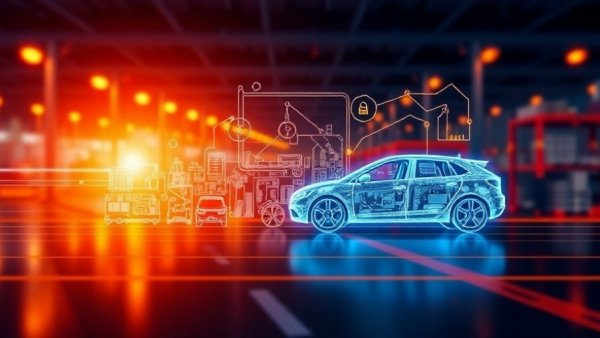
Driving into the Future: The Automation of Automotive Supply Chains
The automotive industry is undergoing a profound transformation driven by advancements in technology, particularly artificial intelligence (AI). For vehicle manufacturers and their suppliers, integrating cutting-edge AI tools is not just a trend; it's a critical necessity for navigating the complexities of modern supply chains. As these technologies mature, companies find themselves not only optimizing their operations but also ensuring sustainability, efficiency, and resilience.
The Chaos of Current Planning Methods
Current supply chain planning in the automotive sector often resembles a jigsaw puzzle missing several pieces. Manufacturers deal with fragmented information streams: Finance sets lofty goals based on market forecasts, while Sales generates on-the-ground insights influenced by dealer relationships and customer demand. This disconnected approach can lead to misalignments that ripple throughout the entire organization.
This disconnect causes friction throughout organizational processes. For instance, a sales team might commit to building 5,000 vehicles based on what they hear from dealers, but the Supply Chain team struggles to offer adequate parts due to ongoing semiconductor shortages. The gap between projected and achievable output leads to bottlenecks, excess inventory, and strained supplier relationships. Inventory management becomes a major challenge, where vehicles may pile up, leading to unnecessary storage costs.
Supply Chain Planning in the AI Age
The introduction of AI has the potential to enhance decision-making and streamline operations within this chaos. AI can automate repetitive tasks, analyze trends, and even predict market shifts more effectively than traditional methods. By leveraging machine learning algorithms, automakers can analyze historical data to identify patterns that inform better decision-making. Moreover, AI's predictive capabilities may allow manufacturers to adjust production in real-time, thereby reducing waste and inefficiency.
However, challenges remain. Despite faster code writing and the capability of AI to manage tasks once handled by junior engineers, bottlenecks continue to manifest in areas like testing and architectural design. Many organizations find themselves caught in a cycle where while AI reduces some tasks, it adds layers of complexity in others, indicating that full automation may not be the complete answer.
As Ryan Manes from o9 Solutions asserts, AI can accelerate the coding process, but organizations must ensure human oversight and engagement in more complex areas. This shift can:
- Enhance accuracy in production forecasting, allowing for better alignment between expected demand and actual supply.
- Streamline procurement processes by predicting shortfalls or surpluses in component delivery.
- Adapt to unexpected disruptions such as geopolitical events or natural disasters through flexible planning mechanisms.
Real-World Examples: Success and Lessons Learned
Automakers like GM are experiencing both the opportunities and challenges brought by AI integration into their supply chains. In one instance, a major automotive manufacturer shifted production to focus on electric vehicle (EV) output, heavily investing in new plants and technology. Despite the foresight, fluctuating consumer demand left some assembly lines underutilized, complicating profitability projections and straining resources.
Another automotive company repeatedly faced high costs due to misplaced inventories. Vehicles were repositioned across different regions because their predicted demands were inaccurate. This inefficiency not only strains logistics but also impacts the overall bottom line, emphasizing the dire need for real-time data and accurate forecasting. These real-world scenarios highlight not only the complexity of automotive supply chains but also the urgent need for effective AI applications that can accurately align predictions with market realities. Through these experiences, companies are learning to adapt and recalibrate their strategies, showcasing how innovation is crucial for continued progress.
Global Trade Dynamics and Supply Chain Disruption
The automotive sector's interdependence on global supply chains also presents risks. Factors like trade policies, tariffs, and international labor disputes can exert significant pressure. For example, the recent global semiconductor shortage accentuated these vulnerabilities, revealing how external factors can cripple production capabilities.
In this context, AI could be pivotal in building resilience—allowing manufacturers to adapt rapidly to shifting landscapes. By analyzing global trends and potential disruptions, AI tools can help companies make informed decisions about sourcing materials and managing logistics, fostering a more proactive approach rather than a reactive one typically seen in past crises.
The Path Forward: A Four-Step Process for Integration
To harness AI’s full potential in supply chain management, automotive leaders might consider implementing a structured four-step process:
- Assess Current Systems: Understand the limitations of existing IT systems. Knowing where the bottlenecks lie is critical for making targeted improvements.
- Data Integration: Facilitate seamless data sharing across departments. Breaking down silos can lead to more cohesive planning and operations.
- Invest in AI Capabilities: Upgrade technology and training focused on AI tools. Continuous learning and development ensure that teams can effectively utilize advanced technologies.
- Continuous Evaluation: Regularly refine processes based on performance metrics and market conditions. This adaptive strategy helps organizations pivot as required to meet evolving challenges.
Conclusion: Embracing Change to Drive Success
It's clear that addressing the challenges within automotive supply chains requires innovation. By leveraging AI tools effectively, automakers can transform the chaos into a coordinated strategy that enhances both efficiency and responsiveness. The future of the automotive industry is not just about the vehicles themselves, but also about how these vehicles are created and delivered to consumers.
As they push bounds to remain competitive, the potential benefits are as vast as the open road ahead. Recognizing and addressing the complexities of the current landscape while embracing AI's possibilities will be key in steering towards success in the automotive industry. As they embrace these changes, companies will not only ensure their survival but may redefine what success looks like in an ever-evolving market.
Call to Action: Stay informed about advancements in AI and how it can support automotive supply chain logistics! Follow us for updates and expert insights into the evolving automotive landscape.










Write A Comment